How to Choose a Curated Eyewear Collection That Fits Your Personal Style
Have you ever noticed how the right pair of glasses can change the way an entire outfit feels? Eyewear is no longer only a practical accessory. It can communicate confidence, creativity, refinement, or individuality in a subtle but powerful way.
With so many shapes, colors, materials, and finishes available, choosing the right frames can still feel overwhelming. A curated eyewear collection offers a more thoughtful approach. Instead of following every new trend or purchasing several similar designs, you can build a selection that feels intentional, versatile, and closely connected to your lifestyle.
The goal is to choose frames that complement your features, support your daily routine, and feel yours distinctly.
Key Takeaways
-
Personal style should guide the shape, color, and finish of each frame.
-
Frame measurements and facial proportions can improve fit and visual balance.
-
Each pair should serve a clear purpose within your lifestyle.
-
Material quality, lens function, and construction deserve careful attention.
-
A thoughtful collection should provide variety without unnecessary repetition.
How to Choose from a Curated Eyewear Collection that Fits Your Style
1. Start by Defining Your Personal Style
Before choosing frames, consider how you naturally dress and present yourself. Your eyewear should feel connected to the clothes, colors, and accessories you already enjoy wearing.
Minimalist dressers may prefer transparent acetate, slim profiles, neutral shades, and clean silhouettes. Those with a more creative style may be drawn to sculptural forms, expressive colors, geometric shapes, or distinctive detailing.
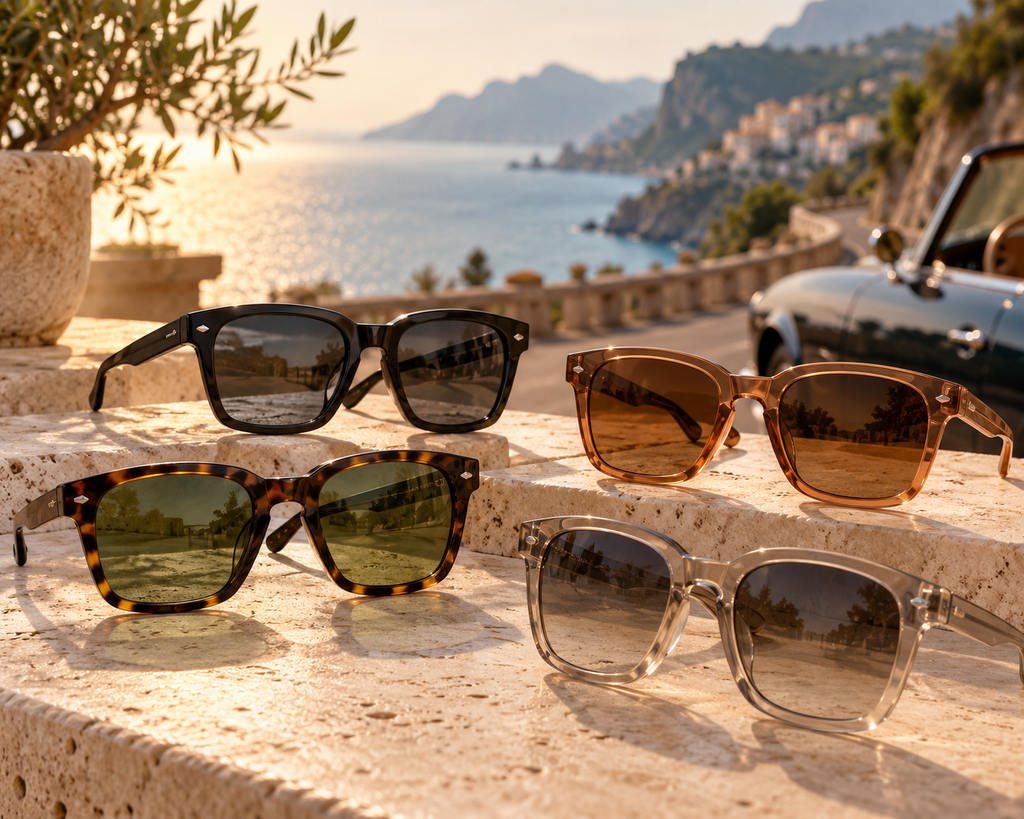
People who prefer classic fashion often feel comfortable in black, tortoiseshell, cognac, or Havana finishes. Refined Italian frames can work especially well for this style because they often combine structured shapes with elegant color and detailing.
Ask yourself:
-
Do I usually dress in neutral or expressive colors?
-
Do I prefer understated or statement accessories?
-
Do I want my eyewear to blend into an outfit or become the main feature?
-
Will I wear the frame every day or only for certain occasions?
These questions make it easier to narrow your choices before browsing.
2. Choose Frames That Work with Your Everyday Wardrobe
A frame may look attractive on its own, but still feel difficult to wear with your regular clothing. Study the outfits you wear during a typical week rather than focusing only on special-event looks.
A structured black frame may pair naturally with tailored clothing, simple jewelry, and neutral colors. A warm tortoiseshell or cognac design may work well with softer fabrics, earth tones, and gold accessories. Translucent acetate can add personality without becoming too bold.
For example, a style such as Milano Noir can provide a polished appearance through its structured silhouette, warm-toned lenses, Italian acetate, and subtle gold detailing.
A useful curated eyewear collection should make getting dressed easier. Each frame should complement several outfits rather than requiring a completely new look every time you wear it.
3. Consider Facial Proportions, Not Just Face Shape
Face-shape guides can provide a helpful starting point, but they should not be treated as strict rules. Frame width, lens depth, brow placement, bridge position, and overall scale often matter more than whether your face is labeled round, oval, square, or heart-shaped.
Angular frames can add definition to softer facial features. Rounded designs may soften a stronger jawline. Cat-eye and butterfly shapes can create lift, while oversized frames can make a more expressive statement.
The frame should sit comfortably across the brow area without hiding your features or extending too far beyond the sides of your face. Your eyes should also appear naturally positioned within the lenses.
The best frame is not simply the one recommended by a face-shape chart. It is the one that feels balanced across your brows, cheeks, and bridge while supporting the look you want to create.
4. Use Frame Measurements to Evaluate Fit
Measurements are especially important when shopping online. Compare the dimensions of a new frame with a pair you already wear comfortably.
Pay attention to:
-
Frame width: Determines how the eyewear sits across the face
-
Lens width: Affects the overall scale and visual balance
-
Bridge width: Influences how securely the frame rests on the nose
-
Temple length: Helps determine how the arms sit behind the ears
-
Lens height: Changes how bold, narrow, or oversized the frame appears
For example, Valentina Noir measures 146 mm across, with a 16 mm bridge and 145 mm temples. These details offer more useful guidance than appearance alone, especially for shoppers trying to estimate whether a frame will suit a slimmer or broader face.
Also watch for signs of poor fit, including sliding down the nose, pressure at the temples, cheek contact, uneven positioning, or large gaps at the sides.
5. Select Colors That Complement Your Features and Clothing
Color can create variety within a curated eyewear collection without making the selection feel disconnected.
Black, charcoal, tortoiseshell, and transparent finishes are easy to coordinate with different outfits. Honey, cognac, olive, and Havana shades often pair naturally with warm complexions, brown hair, earth-toned clothing, and gold jewelry.
Blue, gray, silver, and crystalline tones may complement cooler coloring and silver accessories. Burgundy, deep green, and navy can add subtle color while remaining versatile.
Instead of choosing a frame based only on a product photograph, imagine wearing it with three outfits you already own. If it works with all three, it is more likely to become a practical part of your collection.
Personal preference should remain the final guide. A color does not need to follow traditional rules if it makes you feel confident and comfortable.
6. Choose Materials That Match Your Lifestyle
The best material depends on how and where you plan to wear the frame.
Acetate
Acetate is a strong choice for people who enjoy rich color, layered patterns, polished surfaces, and more expressive shapes. Many Italian frames use acetate because it allows for deeper tones and distinctive visual variation.
Metal
Metal frames often feel lighter, slimmer, and more understated. They may suit people who prefer a professional, minimal, or refined look.
Mixed Materials
Frames that combine acetate and metal can provide visual contrast while balancing structure and comfort.
Consider how often you will wear the frame. Daily eyewear may benefit from lightweight construction and a secure bridge. Travel eyewear should feel durable and comfortable for extended wear. Statement designs may place more emphasis on color, shape, and visual impact.
7. Build a Rotation for Different Parts of Your Life
A practical eyewear rotation should support the different settings in your routine.
You may begin with:
-
One neutral frame for everyday wear
-
One polished design for work or formal settings
-
One expressive pair for social occasions
-
One sunglass style for driving and outdoor use
A premium eyewear collection does not need to contain a large number of frames. A few carefully selected options can offer more value than several pairs that look alike or serve the same purpose.
Assigning a role to each pair helps you create genuine variety and reduces the chance of purchasing designs you rarely wear.
8. Add One Signature Frame
A memorable frame can bring individuality to your collection without feeling disconnected from your overall style.
Roma Ambra, for example, combines a sculpted round shape with warm Havana acetate, gradient lenses, and subtle gold details. Venice Azzurro offers a cooler visual direction through translucent crystalline acetate and a softly structured silhouette.
These types of designs show how a premium eyewear collection can create different moods while remaining cohesive.
A signature frame should still feel wearable. Choose it because the shape, color, and proportions suit you, not because it looks dramatic in a product image.
9. Evaluate Limited Edition Frames Carefully
A frame from a limited-edition collection may feel more distinctive because of its colorway, material, production quantity, or design details. However, limited availability should not be the main reason to buy it.
Ask:
- Does the frame fit comfortably?
- Does the color work with my wardrobe?
- Will I wear it regularly?
- Is the design meaningfully different from what I already own?
- Does the craftsmanship justify the price?
A limited frame should earn its place in your collection through fit, comfort, and design, not urgency alone.
10. Examine Construction
Every frame should be evaluated beyond its appearance. Review the hinge construction, bridge design, temple alignment, surface polish, and lens placement. Acetate should have a smooth and even finish, while the frame should feel stable without becoming unnecessarily heavy.
Wink & Nod frame details include features such as Italian acetate, multi-barrel Teflon hinges, saddle-nose bridges, and CR-39 lenses with ultraviolet protection.
Clear product information helps shoppers understand whether a frame offers the quality and function expected from a premium eyewear collection.
11. Review Lens Function Before Purchasing
Before browsing an online sunglasses store, consider what you need the lenses to accomplish.
Driving may require glare reduction and clear color perception. Outdoor reading may make sun readers more useful. Frequent travelers may prioritize lightweight construction, secure coverage, and strong ultraviolet protection.
You may also want to review:
- Prescription compatibility
- Polarized lens options
- Gradient lenses
- Lens tint and visibility
- Full ultraviolet protection
- Photochromic options
- Suitability for stronger prescriptions
The frame and lenses should work together. A beautiful design has limited value if it does not support your daily visual needs.
12. Compare Your Final Options Before Deciding
Once you have narrowed your choices, compare the final two or three frames using the same criteria.
Consider:
- Fit
- Comfort
- Material
- Color
- Lens function
- Versatility
- Construction
- Return policy
- Long-term wearability
You can also use virtual try-on tools, compare measurements with an existing pair, and review several product images before making a final decision.
Taking a little extra time at this stage can help you choose a frame you will continue to enjoy long after the first impression.
Conclusion
Personal style becomes more expressive when eyewear is chosen with intention rather than impulse. A curated eyewear collection allows you to balance everyday practicality with confidence, character, and variety.
The strongest choices are the frames that feel natural when worn, support your routine, and continue to appeal beyond a passing trend. Take time to compare proportions, colors, materials, construction, and lens functions before deciding what deserves a place in your rotation.
When every pair contributes something meaningful, eyewear begins to feel less like a necessity and more like a signature part of your identity.
Explore Wink & Nod and discover a frame that fits your features, lifestyle, and personal style.
FAQs
How many pairs should a curated eyewear collection include?
There is no fixed number. Many people can build a useful collection with three to five pairs, depending on their prescription, lifestyle, work environment, outdoor activities, and style preferences.
How can I tell whether a frame will fit when shopping online?
Compare the frame width, lens width, bridge width, and temple length with a pair you already wear comfortably. It is also helpful to review virtual try-on tools, customer support options, and return policies.
Should every pair in my collection have a different shape?
Not necessarily. Similar shapes can still serve different purposes when they vary in color, material, lens type, finish, or level of formality. The goal is a useful variety rather than forced contrast.
How often should eyewear be replaced?
Eyewear should be replaced when your prescription changes, the frame becomes damaged, the lenses are heavily scratched, or the fit no longer feels secure and comfortable.
Can sunglasses be part of a prescription eyewear collection?
Yes. Many sunglass frames can accommodate prescription lenses. Suitability depends on the frame shape, lens curvature, material, and the strength of the prescription.
What is the best way to protect premium eyewear?
Store each pair in a protective case, clean the lenses with a microfiber cloth, avoid leaving frames in extreme heat, and have loose hinges or alignment issues corrected by a qualified optician.