How Italian Acetate Differs from Injection-Molded Sunglasses
Sunglasses may look similar at first glance, but the material and manufacturing process can change how they feel, wear, and age over time. Two common approaches are Italian acetate frames and injection-molded plastic frames. Both can produce stylish eyewear, but they are made differently and often serve different price points, design goals, and customer expectations. Understanding those differences can help you judge quality more clearly instead of choosing based only on appearance.
If you are comparing frames in a sunglasses store or browsing a more selective collection online, these seven differences explain what sets the two materials apart.
Key Takeaways
- Italian acetate is typically cut and polished from solid sheets rather than formed in a mold.
- Injection molding is faster and better suited to large-scale production.
- Acetate often offers richer color depth and more detailed patterns.
- Frame feel, adjustability, and finishing can differ between the two materials.
- Neither material is automatically better for every buyer, but they serve different design and pricing goals.
7 Ways Italian Acetate Differs from Injection-Molded Sunglasses
1. They Are Made Using Different Processes
The biggest difference is how the frames are created.
Italian acetate is generally produced in sheets. Eyewear makers cut frame shapes from those sheets, then machine, tumble, polish, and assemble the pieces. This process requires more finishing work and often involves several production stages before the frame is ready.
Injection-molded sunglasses are made differently. Heated plastic is injected into a shaped mold, allowed to cool, and then removed as a formed part. This method is efficient and makes it easier to create large quantities of nearly identical frames.
Because of this, injection molding is often used for high-volume eyewear, while acetate construction is more common in brands focused on craftsmanship, distinctive finishes, and smaller production runs.
2. Italian Acetate Usually Has More Color Depth
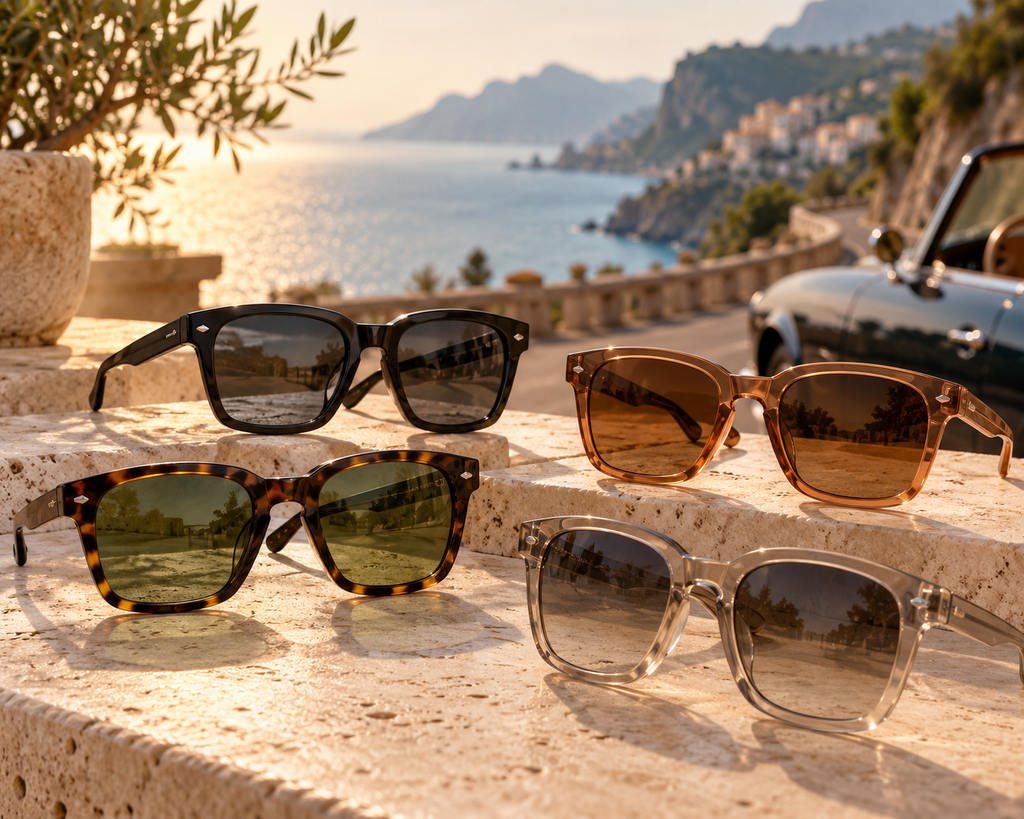
Acetate sheets can contain layered colors, marbling, translucent areas, tortoiseshell effects, and complex patterns. Since the pattern runs through the material rather than simply sitting on the surface, the frame can look richer when viewed from different angles.
That is one reason many Italian frames have a more dimensional appearance.
Injection-molded plastic can also be produced in many colors, but the finish is often more uniform. The color may appear flatter or more consistent across every frame because the material is shaped in a controlled mold.
For buyers who care about visual detail and variation, acetate often offers a more distinctive result.
3. The Surface Finish Can Feel Different
The way the material is finished also affects how the frame feels in the hand.
Acetate frames are commonly polished through several stages to produce a smooth surface and refined shine. Edges can be softened, sculpted, or shaped with more detail. This can give the frame a substantial and finished feel.
Injection-molded frames usually come out of the mold much closer to their final shape. They may still be polished or treated afterward, but the process is generally less labor-intensive.
This does not mean molded sunglasses always feel cheap. High-quality molded frames can still be comfortable and attractive. However, shoppers comparing them side by side may notice that acetate has a denser, smoother, and more handcrafted feel.
4. Acetate Allows More Frame Adjustment
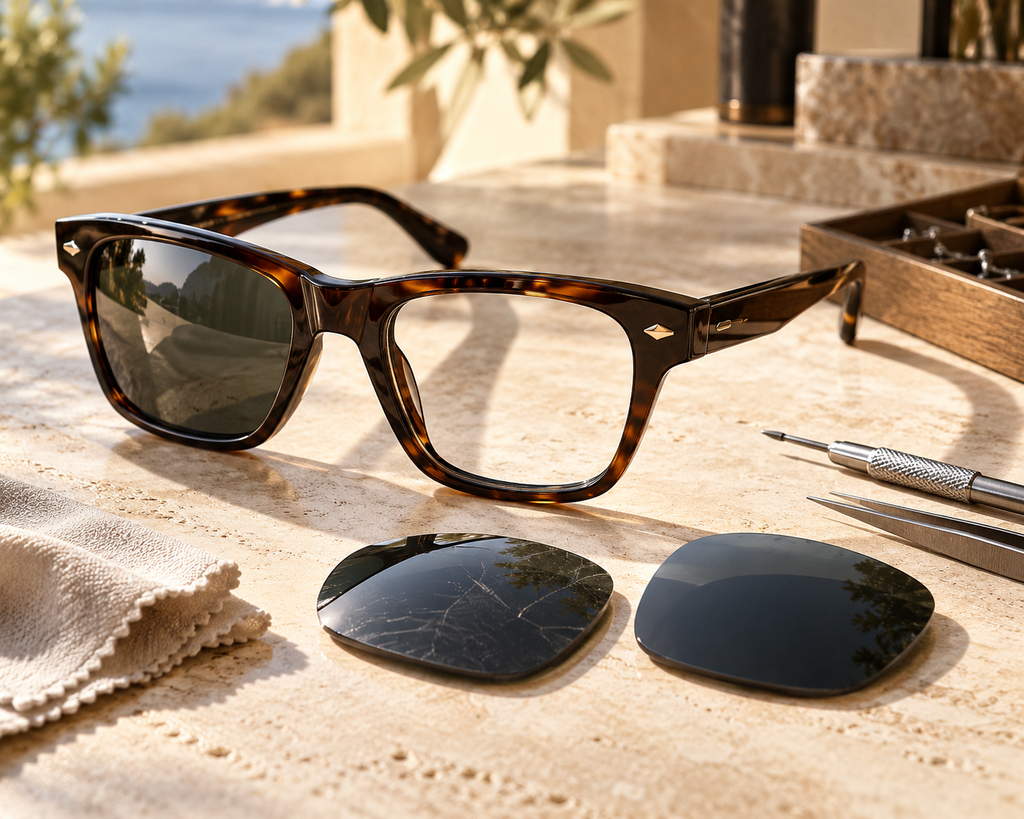
Many acetate frames can be gently heated and adjusted by an experienced eyewear professional. The temples, bridge area, and frame alignment may be modified slightly to improve comfort or fit.
This can be useful for people whose glasses sit unevenly, slide down the nose, or need small adjustments around the ears.
Injection-molded plastic can be less flexible depending on the exact material used. Some molded plastics respond poorly to heat or may not hold an adjustment as well.
For this reason, a premium eyewear collection may place greater emphasis on acetate when fit, finishing, and long-term wear are important parts of the product experience.
5. Production Scale Is Usually Different
Injection molding is designed for efficiency.
Once a mold has been created, manufacturers can quickly produce large numbers of matching frame components. This keeps production consistent and can reduce the cost per unit.
Acetate manufacturing tends to be slower. Frames are cut from sheets, which means more material handling, machining, polishing, and assembly may be involved.
This difference matters when brands decide how many units to produce. Injection molding makes sense for broad commercial releases, while acetate can work well for smaller, premium collections with greater design variation.
That is also why a limited edition collection may use acetate when a brand wants distinctive patterns, smaller production quantities, or a more crafted appearance.
6. Patterns Can Vary from Frame to Frame
Acetate has another interesting quality: individual frames can show slight visual differences.
If the sheet contains marbling, tortoiseshell, streaks, or layered colors, the exact pattern changes depending on where the frame is cut from the sheet. Two pairs from the same design may therefore look similar without being completely identical.
That variation can make the eyewear feel more individual.
Injection-molded frames are usually designed for greater uniformity. Each frame comes from the same mold, so shape and color placement are generally more consistent across units.
Neither approach is wrong. Some buyers want exact consistency, while others appreciate the small differences that come with patterned acetate.
7. They Often Occupy Different Price and Design Categories
The final difference is how the materials are commonly positioned in the market.
Injection-molded sunglasses are often used where cost efficiency, repeatability, and large-scale production matter most. This makes them common in affordable fashion eyewear and mass-market collections.
Acetate frames usually require more production steps and finishing work, which can increase manufacturing cost. As a result, they are often found in higher-priced collections where material selection, polishing, design detail, and frame construction receive more attention.
Still, price alone does not determine quality. A poorly made acetate frame is not automatically superior to a well-designed molded one.
The better question is what you value. If you want lightweight convenience and affordability, molded sunglasses may work well. If you care about rich patterns, detailed finishing, adjustability, and a more substantial frame feel, Italian acetate may be the stronger choice.
Conclusion
The difference between Italian acetate and injection-molded sunglasses goes far beyond appearance. The two materials follow different production methods, create different visual effects, and often offer different levels of adjustability, consistency, and finishing. Acetate tends to appeal to buyers who value depth of color, craftsmanship, and distinctive frame character, while injection molding offers speed, consistency, and efficient production.
When comparing sunglasses, it helps to look at how the frame is made rather than judging only by shape or branding. Understanding the material gives you a clearer sense of what you are paying for and what kind of wearing experience to expect.
Shop Italian acetate glasses and discover distinctive frames at the Wink n Nod Eyewear sunglasses store today.
FAQs
Can acetate sunglasses be fitted with prescription lenses?
Many acetate sunglasses can be fitted with prescription lenses, depending on the frame curve, lens size, and prescription strength. An optician can confirm whether your selected frame supports the lens type you need.
Are polarized lenses the same as UV protection?
No. UV protection blocks harmful ultraviolet rays, while polarization reduces reflected glare from surfaces such as water, snow, and roads. Look for lenses labeled UV400 or 100% UV protection. Polarization is an additional feature.
How should sunglasses be cleaned safely?
Rinse away dust first, then use a clean microfiber cloth and lens-safe cleaner. Avoid paper towels, shirts, and household glass cleaners, which can scratch lenses or damage lens coatings.
What does a limited-edition collection usually mean?
A limited-edition collection generally refers to designs produced in restricted quantities or released for a short period. Ask whether the limitation applies to the colorway, frame model, or entire production run.
Should I shop at a sunglasses store before buying?
A reputable sunglasses store can help you compare frame materials, check fit at the bridge and temples, and understand lens options such as polarization and prescription compatibility. Ask about warranty coverage, adjustment services, and return policies before making a decision.